

UNSW Researchers Develop Improved Hydrogen Fuel Cell Design with 75% Greater Power Output
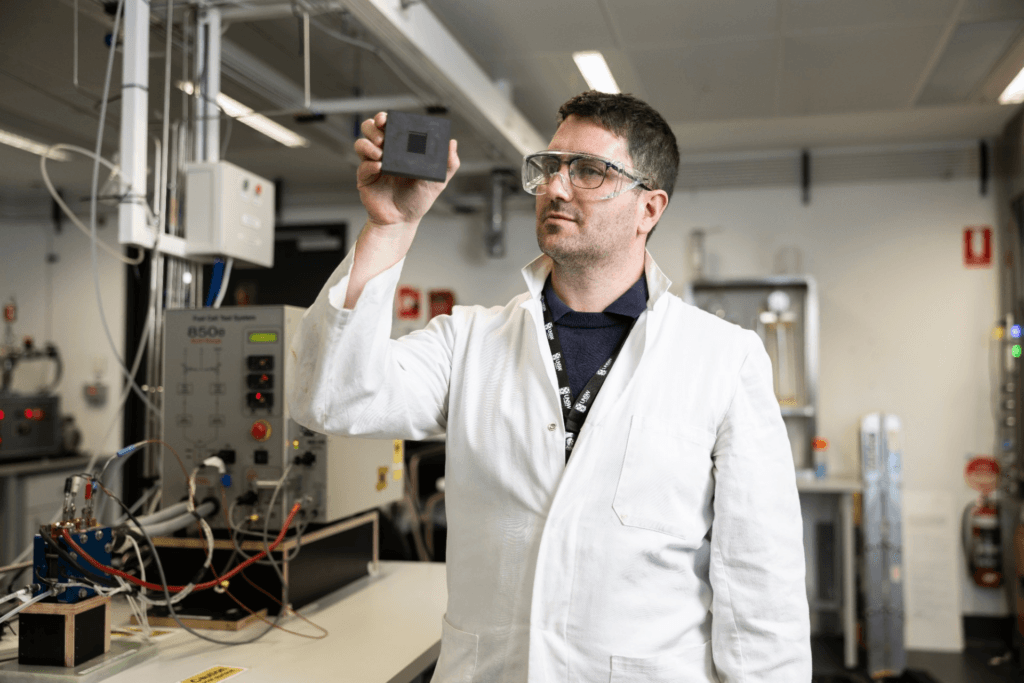
A multidisciplinary team from UNSW's School of Chemistry, led by Dr Quentin Meyer and Professor Chuan Zhao, has developed an improved hydrogen fuel cell design that addresses a critical operational limitation that has hindered commercialization.
The redesign incorporates microscopic channels—100 micrometres wide and separated by 100 micrometre micro-ribs—into the fuel cell's internal structure. These "lateral bypasses" allow water and gases to escape before accumulation occurs, eliminating the need for complex, energy-intensive water management systems that typically add cost and weight.
According to the research, the new design achieves 75% more power than conventional fuel cell designs. The system is also less dependent on costly metals like platinum and requires less overall weight and cost compared to traditional approaches.
The technology has applications in aviation and heavy freight transport, sectors where battery-powered alternatives face limitations. The team notes that the design could enable longer flight times for low-altitude aircraft and cleaner heavy transport solutions.
The lateral bypass technology has been patented, and the research team is currently working on scaling the design for commercial applications. The findings were published in Applied Catalysis B: Environment and Energy.
Originally reported by Hydrogen Central. Read the full article →