

South Korea's KIMS Develops Iron-Based Catalyst to Reduce Green Hydrogen Production Costs
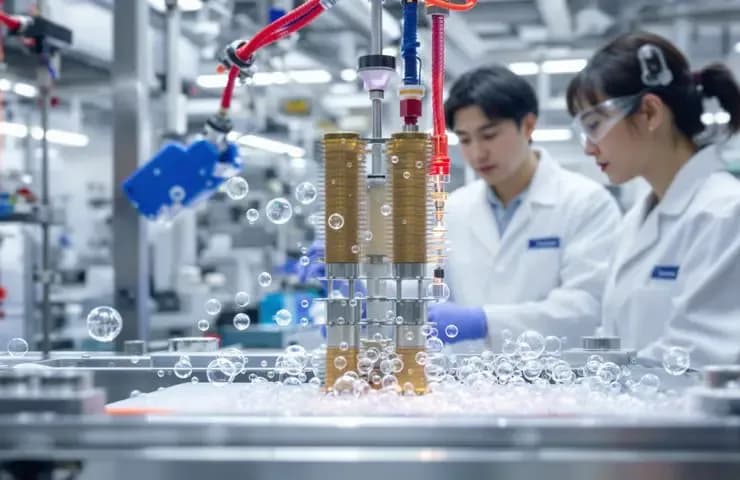
The Korea Institute of Materials Science (KIMS) has launched a research project to develop a high-performance catalyst using iron substitution for water electrolysis, aiming to reduce costs and improve scalability of green hydrogen production. The initiative aligns with South Korea's 2050 carbon neutrality targets and the nation's Hydrogen Economy Roadmap.
The project addresses a critical barrier to hydrogen adoption: the high cost of platinum-group metal catalysts used in conventional electrolyzers. By replacing scarce precious metals with more abundant iron-substituted transition metal oxides, KIMS aims to make green hydrogen economically viable for heavy industry, data centers, and fueling infrastructure.
The iron-based catalyst design employs lattice distortion and oxygen vacancy engineering to enhance the hydrogen evolution reaction and oxygen evolution reaction. This approach is compatible with both alkaline and proton exchange membrane (PEM) electrolyzer designs, enabling integration into existing systems with minimal modification.
KIMS is collaborating with small and medium enterprises in Daejeon to advance the technology from laboratory development to commercial pilot projects. Planned milestones include proving durability under continuous operation, optimizing manufacturing processes, and securing regulatory approval within the next year.
The development could significantly reduce electrolyzer capital and operational expenditures while lowering the lifecycle environmental footprint compared to precious metal catalysts. The approach supports renewable energy storage integration and could help establish hydrogen infrastructure in remote regions where grid connectivity is limited.
Originally reported by Hydrogen Fuel News. Read the full article →