

Saarbahn's €7.6 Million Hydrogen Refueling Station Reveals Infrastructure Cost Challenge
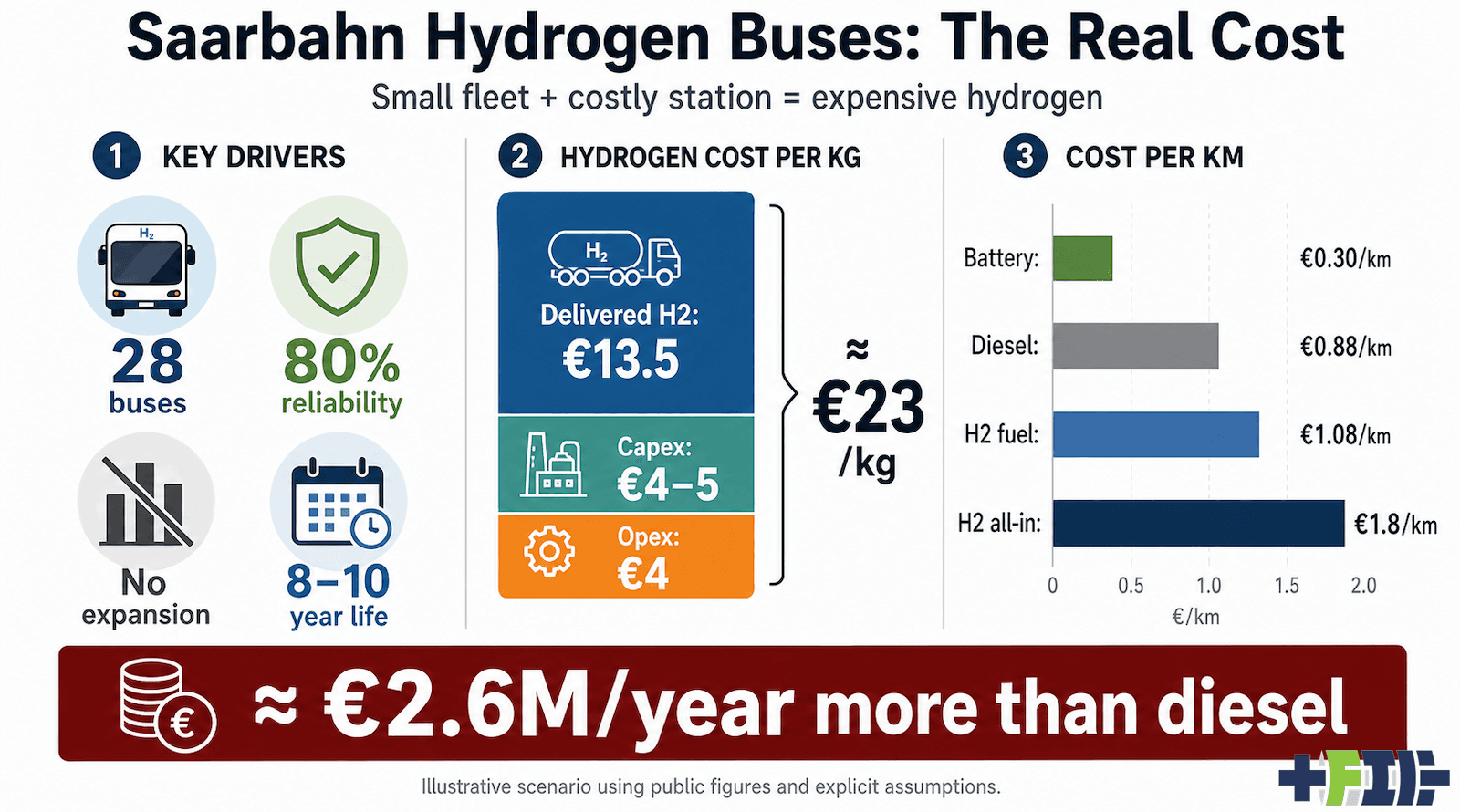
Saarbahn in Saarbrücken has opened a hydrogen refueling station equipped with three 350 bar dispensers and storage capacity to support its fleet of 28 Wrightbus Kite Hydroliner fuel-cell buses. The station represents the shift from procurement planning to operational implementation of hydrogen transit infrastructure.
The project received approximately €11.1-11.17 million in federal support through Germany's alternative bus drivetrain program, with €3.06 million specifically allocated to the refueling station. The buses store 36.5 kg of hydrogen each and can travel 350-400 km between refuelings.
A detailed cost analysis reveals significant infrastructure challenges. Based on estimated annual consumption of 220 tons of hydrogen across the 28-bus fleet, the refueling station's capital and operating costs add approximately €8.6-9.7/kg to delivered hydrogen costs. With delivered hydrogen estimated at €13.50/kg, the total cost at the bus nozzle reaches approximately €22-23/kg.
This translates to €1.81/km for hydrogen fuel and infrastructure, compared to €0.88/km for diesel and €0.30/km for battery-electric buses. The annual infrastructure and fuel premium for hydrogen exceeds €2.55 million compared to diesel and €4.14 million compared to battery-electric alternatives.
The analysis assumes 80% system reliability and a ten-year operational horizon. A longer-term plan involves producing green hydrogen at Freisen from 2028 using wind-powered electrolysis, supported by €2.7 million in regional funding. Currently, hydrogen is delivered by truck trailers.
Originally reported by CleanTechnica. Read the full article →