

Japan Plans to Begin Commercial Geologic Hydrogen Production by 2040
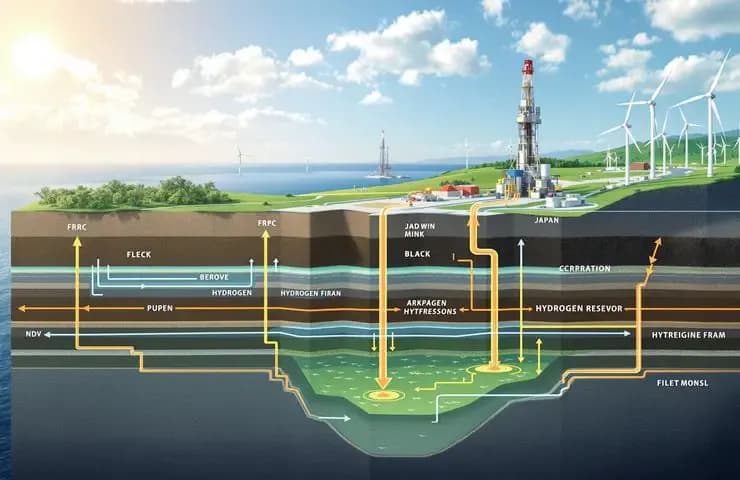
Japan has officially greenlit a commercial-scale initiative to extract geologic hydrogen—naturally occurring hydrogen trapped in underground rock formations—according to reporting from Yomiuri Shimbun. The government aims to begin full-scale domestic hydrogen production by 2040, following a decade of surveys and pilot well evaluations.
Geologic hydrogen is produced naturally through subsurface processes like serpentinization, where water and rock interact under specific temperature and pressure conditions. This "white" hydrogen requires virtually zero upfront emissions to produce, distinguishing it from hydrogen derived from electrolysis or steam methane reforming.
Extraction methods mirror natural gas operations, using seismic imaging, magnetotelluric surveys, and rock sampling to locate deposits. Once extracted, hydrogen undergoes separation, compression, and drying before pipeline transport or liquefaction.
The initiative addresses Japan's energy security concerns, as the country currently imports nearly all its hydrogen—primarily as liquefied shipments from Australia and the Middle East. Domestic production could reduce exposure to price volatility and shipping delays while supporting rural economies in exploration areas.
The project aligns with Japan's 2017 Basic Hydrogen Strategy and its net-zero targets. Technical challenges remain, including determining reserve sizes, establishing safety protocols for hydrogen extraction, and developing regulatory frameworks for subsurface gas ownership and pipeline standards.
Similar geologic hydrogen projects are underway in Australia and Europe, providing preliminary data on reservoir dynamics.
Originally reported by Hydrogen Fuel News. Read the full article →