

Hazer Group and KBR Complete Design Package for Commercial-Scale Turquoise Hydrogen Plants
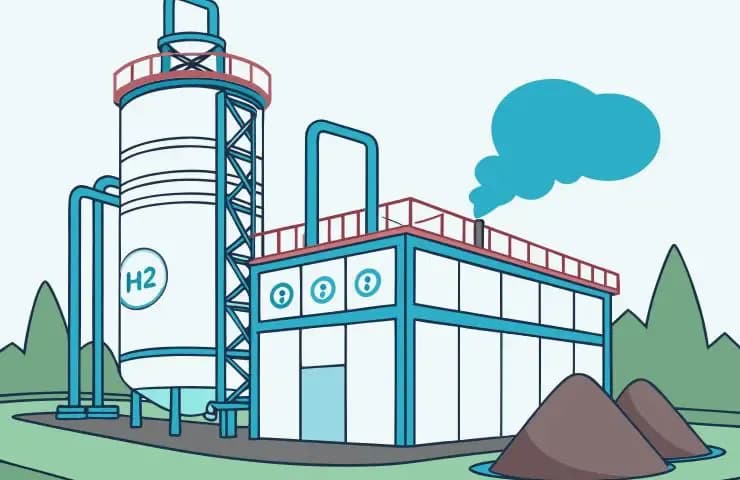
Hazer Group Limited and engineering firm KBR have completed a detailed Process Design Package (PDP) for a standardized, commercial-scale turquoise hydrogen plant. The milestone represents a transition from pilot-stage development to deployment-ready technology.
The Hazer Process uses thermal decomposition of natural gas with an iron ore catalyst to split methane into hydrogen gas and solid graphite carbon. Unlike steam methane reforming, the process avoids direct CO₂ emissions, and unlike electrolysis, it requires no significant water consumption.
The standardized PDP includes engineering specifications, material balances, and equipment sizing designed for large commercial operations. This approach reduces capital costs and accelerates project development timelines by eliminating the need for custom design work on each deployment.
The graphite byproduct serves as a secondary revenue stream, with applications in battery anodes, electronics, and advanced materials like graphene. KBR contributed process flow diagrams, safety systems design, and commissioning protocols to the package.
Hazer Group, which emerged from University of Western Australia research and operates a demonstration plant in Perth, positions turquoise hydrogen as a middle ground between green hydrogen (electrolysis) and conventional steam methane reforming—particularly suitable for regions with abundant natural gas but limited renewable energy capacity.
The companies indicate the standardized design is ready for deployment in gas-rich regions globally, pending regulatory approval and feedstock offtake agreements.
Originally reported by Hydrogen Fuel News. Read the full article →