

Global Low-Carbon Hydrogen Capacity Projected to Reach 82.3 Million Tons by 2030
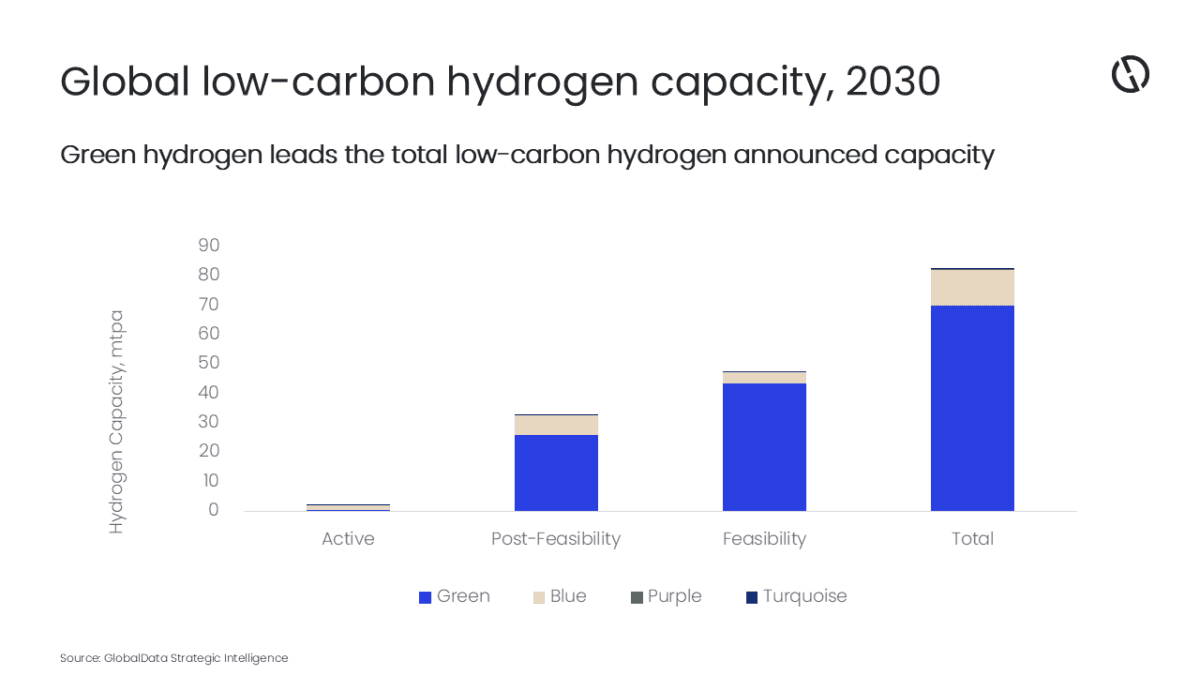
According to GlobalData's "Hydrogen in Oil and Gas" report, global low-carbon hydrogen capacity stood at approximately 2.2 mtpa as of February 2026, distributed across more than 460 projects—a significant increase from 104 projects in 2020. The analytics firm projects total global hydrogen production capacity could reach 82.3 mtpa by 2030, though deployment faces challenges related to demand uncertainty, financing constraints, and execution risks.
Currently, only about 2% of projected 2030 capacity is operational, with 26% tied to advanced-stage projects and 57% still in feasibility stages. Most planned projects remain small-scale, with only 10 of 2,335 projects expected to exceed 1 mtpa capacity.
In related developments, electrolyzer manufacturer Topsoe has terminated supply agreements with First Ammonia following missed project milestones. The companies had collaborated since 2022 on a green ammonia project in Texas utilizing 100 MW of solid oxide electrolysis cell modules. Topsoe is conducting a review of its SOEC technology's industrial scale, expected to conclude by mid-2026, while maintaining a separate 50 MW agreement with Forestal.
Kyocera announced it has developed hydrogen-related components with Japan's space agency, including hermetic seal connectors for liquid hydrogen environments. Additionally, Ceres Power Holdings is collaborating with Centrica to deploy solid oxide fuel cell and electrolysis technologies for distributed energy applications across data centers and manufacturing facilities.
Originally reported by PV Magazine. Read the full article →