

Fraunhofer ISE Achieves 31.3% Solar-to-Hydrogen Efficiency with Micro-Concentrator Photovoltaic System
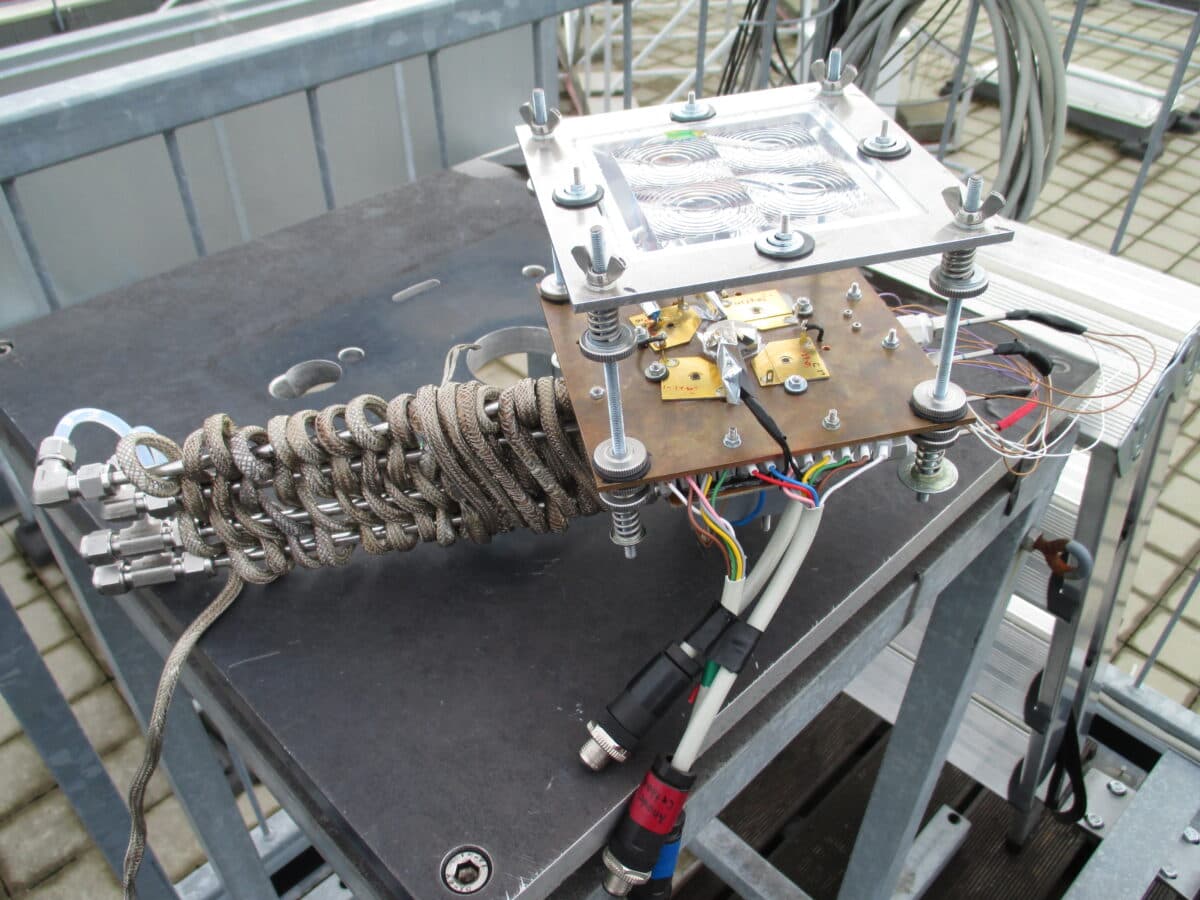
Researchers at the Fraunhofer Institute for Solar Energy Systems (Fraunhofer ISE) in Germany have achieved a record solar-to-hydrogen conversion efficiency of 31.3% using a photovoltaic water electrolysis system based on micro-concentrator photovoltaics (micro-CPV) technology.
The system, called HyCon, consists of Fresnel lens arrays focusing light onto four-junction CPV solar cells electrically and thermally linked to two proton exchange membrane (PEM) electrolyzer cells in series. The CPV solar cells, built through wafer-bonding of dual-junction structures, demonstrated solar-to-electricity conversion efficiencies of up to 47.6% under concentrated light.
Outdoor field testing conducted over 13 summer days in Freiburg, Germany, using a dual-axis solar tracker showed the system achieved hydrogen production with 31.3% STH efficiency—approximately 5% higher than previously reported photovoltaic/electrolysis systems. Peak performance corresponded to CPV array and PEM electrolyzer efficiencies of 34.7% and 91.1%, respectively, with no degradation observed during 107 hours of operation.
The research, published in Communications Engineering, represents a proof-of-concept at technology readiness level (TRL) 3. Frank Dimroth, a lead researcher, noted that commercialization requires partners and development funding, with a planned startup called Clearsun Energy to advance concentrating photovoltaics technology. According to the team's projections, increasing the system's capacity factor to 35% could enable levelized hydrogen costs below $3/kg.
Originally reported by PV Magazine. Read the full article →