

DNV Releases First Offshore Hydrogen Pipeline Standard
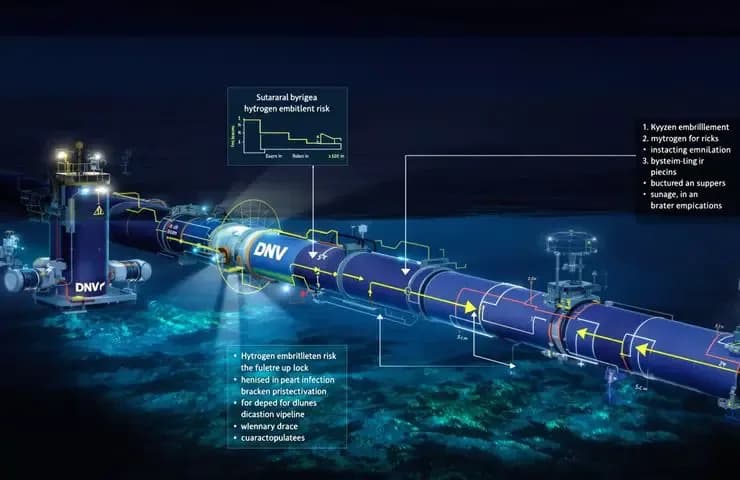
DNV has released DNV-RP-F123 Hydrogen Pipeline Systems, the industry's first recommended practice standard for offshore hydrogen pipelines. The standard provides comprehensive guidance for operators, engineers, and investors developing subsea infrastructure for pure hydrogen or hydrogen blends.
The RP addresses technical challenges specific to hydrogen transport, including hydrogen embrittlement, permeation, and leak behavior in blended gas streams. It extends DNV's existing submarine pipeline code (DNV-ST-F101) with hydrogen-specific requirements covering design, operation, monitoring, maintenance, and requalification of existing pipelines.
Developed based on the H2Pipe Joint Industry Project (2021–2026), the standard incorporates findings from laboratory testing, full-scale trials at the Spadeadam R&D centre in Northern England, and numerical modeling. Key technical provisions include material selection guidelines, wall thickness specifications, hydrogen concentration limits, and evidence-based methods for determining embrittlement thresholds.
The standard enables operators to repurpose existing offshore oil and gas pipelines for hydrogen service, potentially reducing capital expenditure and accelerating project timelines. By standardizing risk assessments and design checks, DNV-RP-F123 aims to reduce investment uncertainty and facilitate permitting approval for hydrogen infrastructure projects.
DNV plans to publish additional full-scale test results from Spadeadam later this year. The complete standard is available on DNV's website, with technical support services including management-of-change reviews and third-party audits.
Originally reported by Hydrogen Fuel News. Read the full article →