

Chilean Researchers Develop Hydrogen Production System Using Recycled Solar Panels
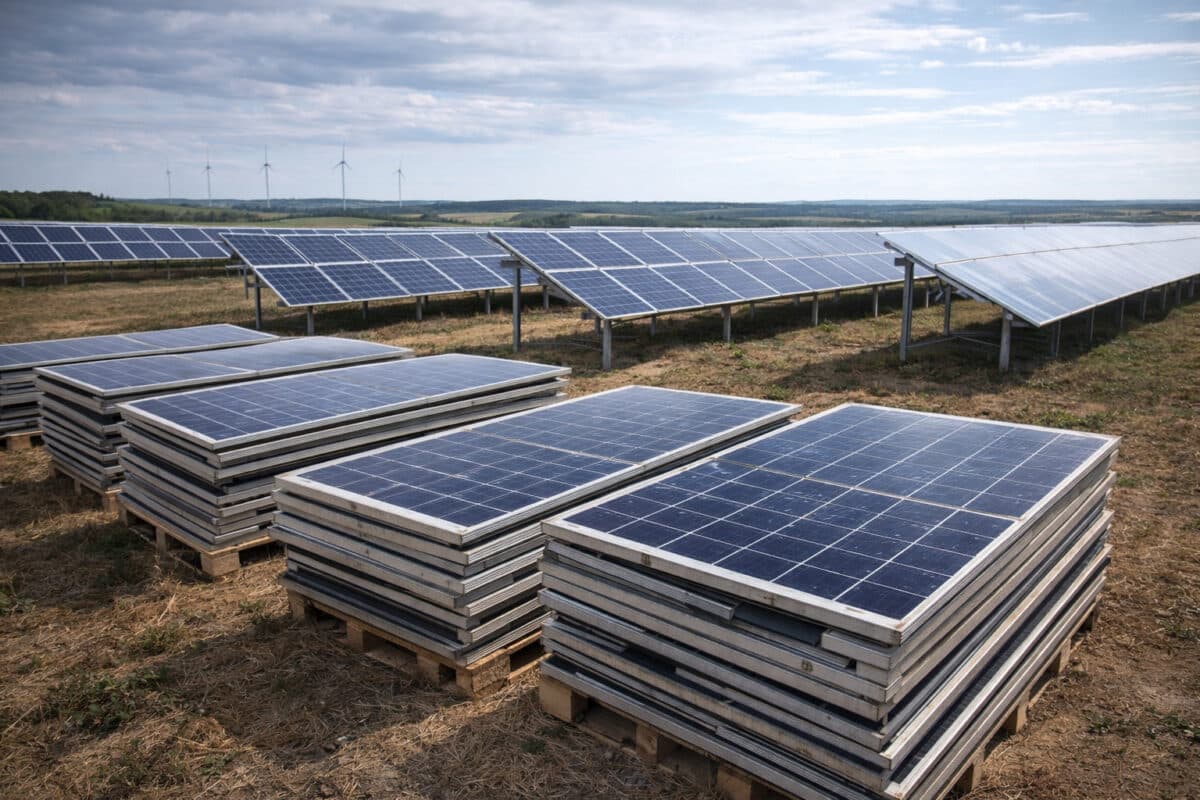
A Chilean research team has developed a residential hydrogen production system that repurposes discarded photovoltaic modules retaining 80-90% of their original capacity. The system pairs these end-of-life solar panels with a proton exchange membrane (PEM) electrolyzer, eliminating the need for conventional power electronics like inverters or maximum power point trackers.
Instead of relying on additional components, the system uses internal reconfiguration of PV modules to match their current-voltage curve directly to electrolyzer requirements. This is achieved by connecting subsets of cells in parallel through internal busbars, enabling customized voltage matching across various PEM technologies and standard panel architectures.
Experimental results validated under real-world conditions show the system produces approximately 345 liters of hydrogen daily—exceeding the estimated baseline household demand of 120 liters per day for cooking and heating. The system achieves 7% solar-to-hydrogen efficiency while delivering 88% of the annual energy yield obtained with power electronics-based optimization.
Economically, the system achieves a levelized cost of hydrogen of $5.8/kg, representing an 18% reduction compared to more complex reference systems. Cost savings stem primarily from eliminating power electronics and reusing existing PV modules.
The researchers acknowledge limitations including lower efficiency than systems with advanced electronic control and dependence on variable solar irradiance. However, they position the solution's simplicity, low cost, and integration ease as advantages for decentralized applications while addressing photovoltaic waste management and green hydrogen cost challenges.
Originally reported by PV Magazine. Read the full article →